


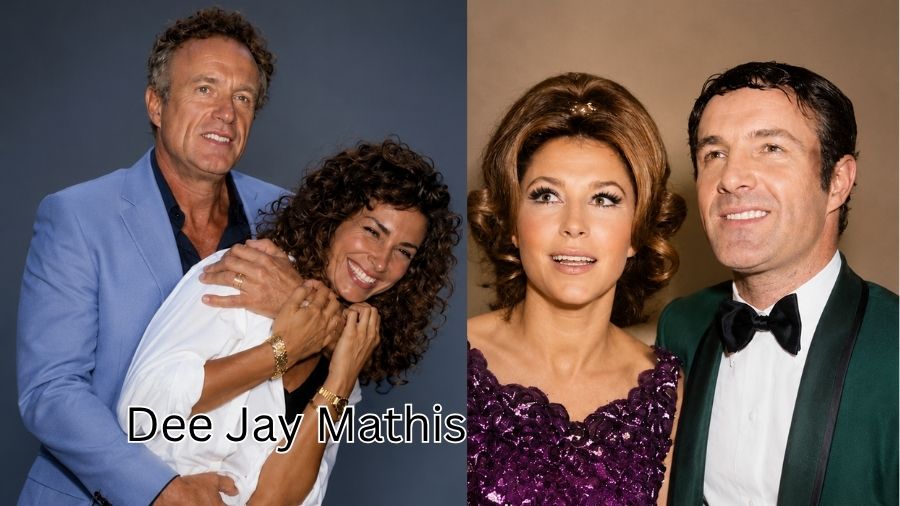
Dee Jay Mathis married James Caan in 1961, divorced him in 1966, and has not sought public attention in the six decades since. Their marriage produced one child, a daughter named Tara, born in 1964. Before and during those years, Mathis worked as a dancer, including an ensemble credit in a 1959 Broadway musical. That is the substance of what reliable records confirm about her, and readers who arrive expecting a full life story deserve to know that upfront rather than after a thousand words of padding.
Most of what circulates online about Dee Jay Mathis goes considerably further than the evidence does. Birth dates, hometowns, career milestones, and speculation about her current life appear across dozens of profile pages, often contradicting one another and rarely citing anything. This article separates the documented from the recycled, because on a subject this thin, knowing which is which is the useful part.
Who Is Dee Jay Mathis?
Mathis entered the public record through her marriage to an actor who had not yet become famous. When they wed in 1961, James Caan was a young performer with a Broadway debut behind him and little else. His breakthrough as Sonny Corleone in The Godfather was more than a decade away, and by the time it arrived their marriage had been over for six years.
She belonged to a working category of performer that the industry produced in large numbers and documented lightly: dancers who moved between stage ensembles, television variety programmes, and uncredited film work. Careers like hers left thin paper trails by design. Ensemble members were not billed, publicity departments had no reason to profile them, and there was no online archive quietly recording the rest. When such performers stopped working, they simply stopped appearing in the record.
What the Record Says About Her Background
Very little, and less than most sources claim. Profile pages routinely give her birth year as 1941 and place her origins in either New York or New Jersey, depending on which page you read. Neither claim is attached to a birth record, a census entry, a contemporaneous news item, or any other document. The disagreement between sources is itself informative: when independent research converges on a fact, it converges on the same fact.
Her full name is another example. One reasonably careful source traces a Broadway listing under the name Dorothy Jeanne Mattis, which several other pages then reproduce as Dorothy Jeanne Mathis. The spellings differ, and the substitution is undocumented. It may well be the same woman under a variant listing, but that is an inference, and this article will not present it as anything more.
Career as a Dancer and Performer
The strongest available credit is a theatrical one. The Internet Broadway Database lists a Dorothy Jeanne Mattis in the original company of First Impressions, the 1959 musical adaptation of Jane Austen’s Pride and Prejudice, as a member of the dancing ensemble and as an understudy for Kitty Bennet.
The production around that credit is well documented. First Impressions opened at the Alvin Theater in New York on 19 March 1959 and ran for 84 performances, with Hermione Gingold as Mrs. Bennet, Polly Bergen as Elizabeth, and Farley Granger as Mr. Darcy. It was a short run by the standards of a major house, but a legitimate Broadway company nonetheless, and an ensemble place in it indicates a dancer who could hold professional work in her late teens.
Two film credits are attributed to her almost universally online: an uncredited part in The Patsy (1964) and a dancer role in Frankie and Johnny (1966). These may be accurate. They also travel with a warning sign. Several sites publishing them render the first title as “The Passy” or “The Pasty,” which is what happens when text is lightly reworded from another page rather than checked against a source. Anyone needing certainty on these should consult the AFI Catalog and IBDB directly, which work from studio records and playbills.
A frequently repeated claim that she danced on The Mitch Miller Show around 1959 rests on no visible source at all, and is best treated as unconfirmed.
Marriage to James Caan and Family
The marriage is the one part of her life with a settled record. Standard biographical references on Caan give the marriage year as 1961 and the divorce as 1966, with a daughter, Tara, born in 1964. Caan married three more times after the divorce, to Sheila Marie Ryan, Ingrid Hajek, and Linda Stokes, and had four more children, among them the actor Scott Caan. He died in Los Angeles on 6 July 2022 at the age of 82.
Beyond those dates, published accounts of the marriage itself are reconstructions. No interview with Mathis about it appears in the accessible record, and Caan, who spoke to the press for fifty years, said little about a marriage that ended before his career began.
Why Readers Search for Dee Jay Mathis
Interest in James Caan’s ex-wife rises and falls with interest in Caan. His death in 2022 produced a wave of it, as did the fiftieth anniversary of The Godfather the same year. The rest is ordinary curiosity about the early, unglamorous chapter of a famous life, plus a smaller stream of readers looking for information about Tara Caan.
That demand has been met almost entirely by pages built to capture the search rather than answer it, which is why so many of them share the same handful of unattributed details and the same unanswerable framing about where she is now.
On Privacy and What This Article Will Not Claim
Mathis left the entertainment industry roughly sixty years ago and has not been a public figure since. She has given no interviews, holds no public role, and has made no bid for attention. Her present whereabouts, her health, her marital status since 1966, and her financial circumstances are not matters of public record, and this site does not treat the absence of information about a private citizen as an invitation to fill the gap.
Conclusion
What can fairly be said about Dee Jay Mathis is this: a young dancer worked on Broadway in 1959, married an unknown actor in 1961, had a daughter in 1964, divorced in 1966, and chose an ordinary life over a public one. The record supports that outline and very little beyond it. Readers looking for the fuller version, the one with birth dates, hometowns, and an answer to where she is today, will find it on plenty of other pages, but they will be reading invention rather than research. A short and accurate account of James Caan’s first wife is worth more than a long and confident one, and this is that account.